How to Use Babys Breath Flower in Garden

Gypsophila spp.
One busy Valentine'due south twenty-four hour period at my loftier schoolhouse co-op job in the local flower shop, someone ordered a bouquet of so many roses I could barely wrap my fingers around the stems every bit I assembled it.
Imagine fifty deep red roses surrounded past dark green leatherleaf ferns. Gorgeous, correct? But my favorite office was the liberal sprinkling of snowy white "gyp" nestled between the roses.
That's what my boss called infant's breath, that white cutting blossom with the tiny blooms you'll find in almost any bouquet. It was i of my favorite fillers.
We link to vendors to help you find relevant products. If you buy from one of our links, nosotros may earn a commission .
Simultaneously hardy and frail, I oftentimes saw it growing in the grasslands well-nigh my dwelling, and began cultivating information technology myself in my wildflower garden.
Read on to acquire how to grow this perfect garden and boutonniere filler at home!
What You'll Learn
- Cultivation and History
- Propagation
- How to Grow
- Growing Tips
- Pruning and Maintenance
- Cultivars to Select
- Managing Pests and Disease
- Best Uses
- Quick Reference Growing Guide
Cultivation and History
Babe's breath belongs to the Gypsophila genus, role of the Caryophyllaceae family unit, aka carnations or pinks.
The proper name Gypsophila translates to lover of gypsum, and it fits well, because this plant loves element of group i soils and grows well in lime or chalk soils.
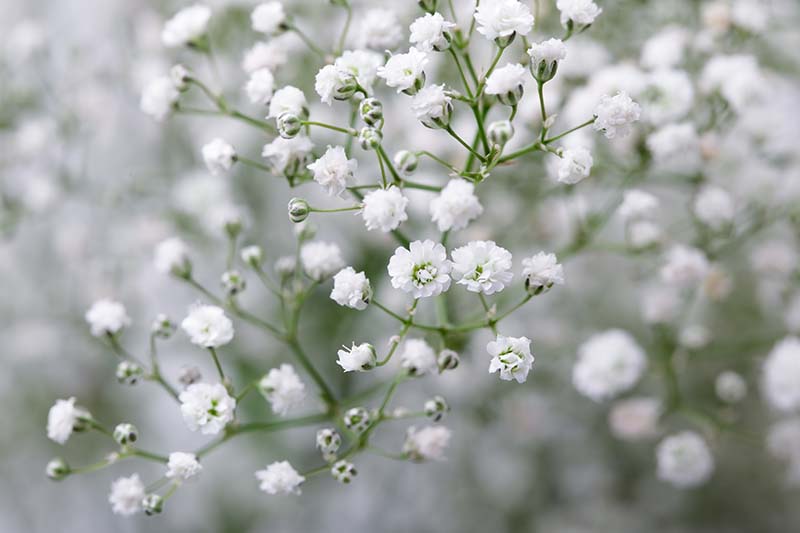
Gypsophila is native to the steppes of Europe and central to western Asia, and was often used every bit an ornamental in Victorian gardens.
Too known every bit lather root in Europe, the roots of plants in this genus contain saponins, which foam and possess cleaning properties when mixed with water.
Some species are still used today as a soap substitute in Europe.
In 1828, Thousand. paniculata was introduced into the United States, where it became known as baby's breath.
People barbarous in honey with the dainty, blusterous blooms and florists saw its potential equally a versatile cutting blossom. It'southward a staple in every blossom store, and is used in bouquets for every occasion, from weddings to funerals.
Its widespread cultivation in gardens and as a cut blossom crop, the fact that each plant can produce over 13,000 seeds each yr that readily germinate, and the ease with which information technology grows in dry, rocky, and sandy soils all contributed to it naturalizing in North America.
G. paniculata is now a mutual weed in pastures, grasslands, and sand dunes in Canada and the Usa, and is listed as a noxious weed in Washington and California.
Find out if unwanted spread is an result in your area via the USDA Natural Resources Conservation Service'due south Plants Database before you constitute it.
There are over 150 species in the Gypsophila genus, with habits ranging from creeping to bushy, and they come in both perennial and annual forms.
3 commonly grown species are panicled, showy, and creeping baby'due south breath.
Chiliad. paniculata, aka common or panicled baby'south breath, is a tall perennial that grows a thirteen-anxiety-long storage taproot.
Pocket-sized white or pink flowers blossom from the summertime to fall, and this species is the favorite among florists. Most cultivars are hardy in Zones 4-9.

Chiliad. elegans, showy baby's jiff, is an annual and it produces larger flowers that bloom wide open. This blusterous constitute will bloom for four to half dozen weeks.
This was the babe'south breath I saw growing in the grasslands, and which I unknowingly had sprinkled effectually my wildflower garden.
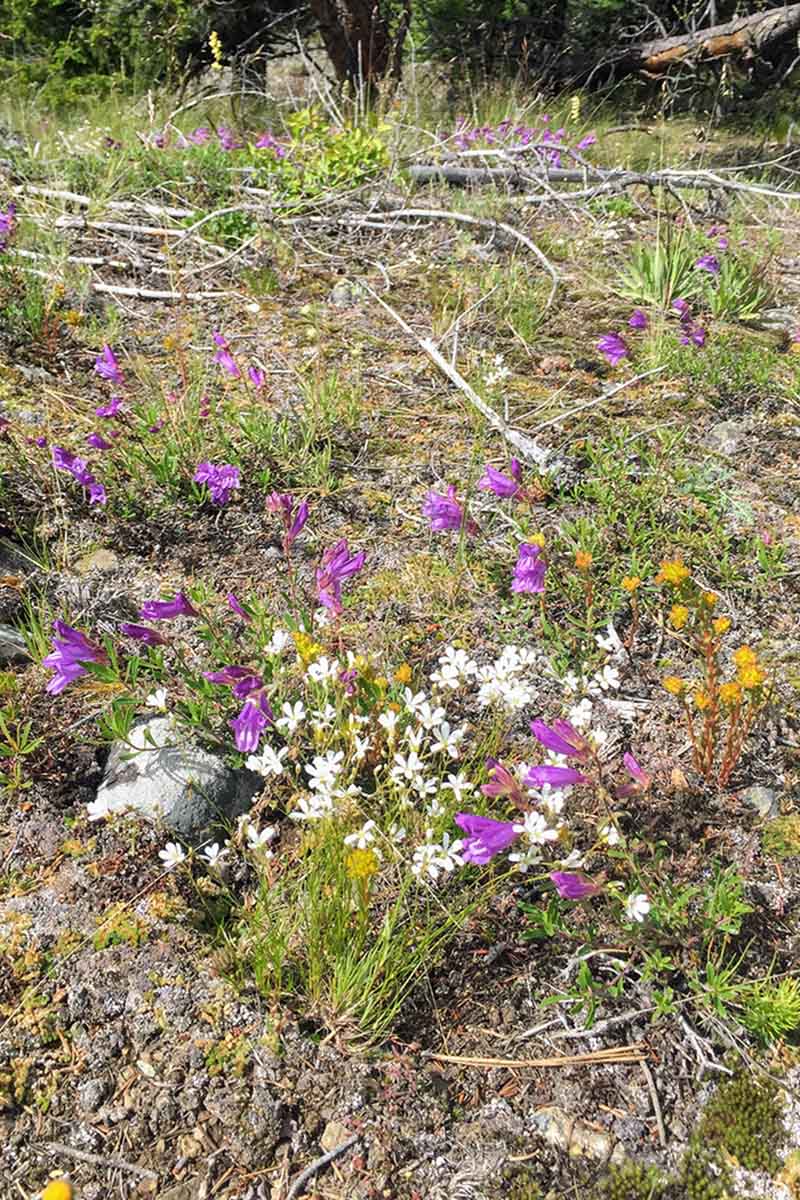
G. repens, creeping infant's jiff or alpine gypsophila, is a curt, mat-forming perennial species native to the mountains of Europe.
Information technology comes in a diversity of colors from white to lilac, and about cultivars are hardy in Zones 2-9.

When stale, all parts of the establish are poisonous, and handling can irritate some people'due south skin. Luckily, the effects are often short lived.
When fresh it is mildly toxic to cats if they eat it, so keep your kitty from playing with this plant if possible.
Propagation
In nature, baby's breath propagates itself readily via the countless seeds information technology produces. Transplants can also be purchased from nurseries.
From Seed
Yous can collect seeds from your plant, or purchase them online. Each plant produces hundreds of flowers, and each flower may yield 4 small seeds.
Bag the blooms subsequently they've faded to catch the seeds earlier they self-disperse.
Y'all may direct sow the seeds in the spring after all danger of frost has passed. Prepare the soil past loosening the summit three inches, making certain it's moistened (merely not soaking moisture), and leveling the surface with a rake.
Broadcast the seeds and cover with about three millimeters of soil. Seeds germinate within 10-twenty days.
Thin seedlings to six to 8 inches (fifteen-20 centimeters) apart. G. elegans makes a cute ground comprehend when planted en masse, so this species may not need thinning.
If y'all choose to grow the annual type and wish to have blooms all season, direct sow a new batch every ii to iv weeks until July.
While straight sowing is easy and works well, if yous want to start the seeds indoors, sow half-dozen to eight weeks before the final frost in a tray of moist propagation medium, as deep every bit you would in the ground.
Keep the medium moist and at lxx°F in a spot out of straight sunlight. Transplant the seedlings into individual pots after the first true leaves announced.
Harden off the plants by slowly introducing them to the outdoors, and transplant into your garden afterward the concluding frost.
While some perennial varieties can take two to three seasons to flower, almost volition bloom in a year when started from seed.
Transplanting
If yous bought a potted perennial variety from a plant nursery, establish information technology in the fall if possible. If you plant in the jump or summertime, information technology volition need to be watered regularly during that first year, especially Thou. repens cultivars.
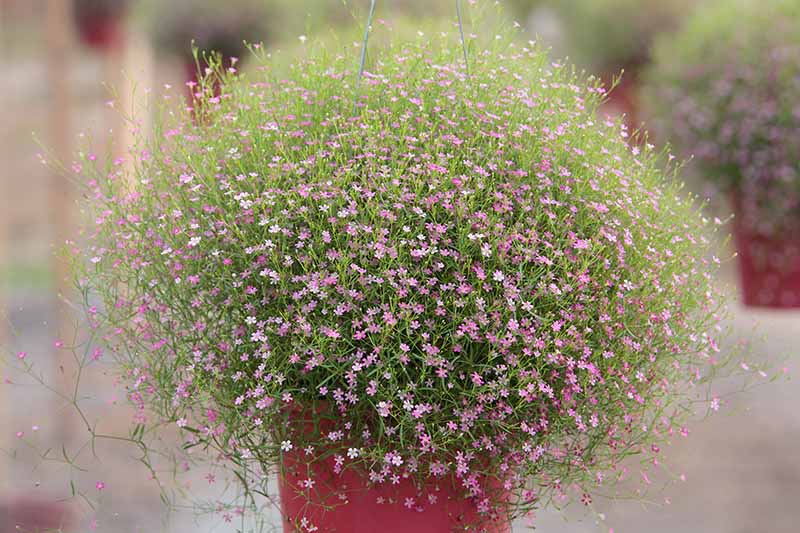
Make certain you cull a spot that is well draining, preferably on the sandy side. Consider doing a soil test to make sure the pH is in the neutral to alkaline range.
Water the plant well before transplanting. Dig a hole slightly larger than the size of the pot, loosen the soil in the lesser of the hole, insert the root ball, and backfill.
Water in after planting.
How to Grow
Perennial infant's jiff is drought and salt tolerant, and all varieties are piece of cake to abound.
While well-nigh cultivars are hardy in Zones 4-9, baby's breath tin can be sensitive to temperatures under forty°F.
Growers cultivating this plant in controlled environments as a cut ingather say ideal temperatures are 59°F at night and 77°F during the 24-hour interval.
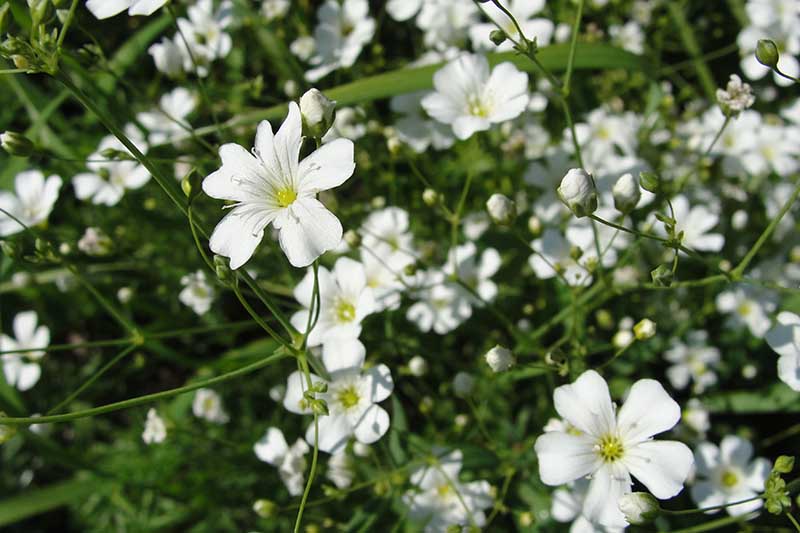
Requite your plants well-draining, neutral to slightly alkaline soil in a sunny spot, and they volition grow splendidly. Meaty and acidic soils are a no-no.
The ideal pH range is 7.0-7.v, but slightly acidic levels as low as 6.5 will be tolerated.
Gypsophila will grow in soil types many other plants don't care for, like dry out and gravelly, sandy, or chalky soils, then it is a perfect choice for xeriscaping!
Information technology will practice well planted in ordinary garden soil, only make certain to not plant in rich soils. Avert fertilizing this plant.
Providing too much water tin rapidly crusade bug similar root and stem rot, so avoid watering unnecessarily and only h2o lightly during very dry periods. Water in the morning to give the plants aplenty time to dry off.
Certain cultivars make bang-up container plants. You can choose from a variety of container types for planting, from hanging baskets to patio planters, as long as y'all fill information technology with a well draining soil mix or soilless medium.
Go along an center on soil wet, every bit container-grown plants may dry out out faster and require more frequent water than those planted in the ground.
Growing Tips
- Plant in lean, dry out, neutral to slightly alkaline soil
- Ensure that soil drains well, and do not overwater
- Select a sunny location
Pruning and Maintenance
Prune panicles back afterward flowering to encourage another blossom and to reduce unwanted seed dispersal. This can be an important strategy in preventing spread exterior of your garden.
When the plant is dormant, cut it down to an inch higher up ground level and encompass with a layer of mulch to improve its chances of surviving the winter. If you don't cut it back, the dry, dead plants can intermission off and tumble through the garden in winter winds.
Double flowered cultivars may be grafted onto hardier unmarried flowered rootstock. If y'all purchased a grafted plant from a nursery, avoid pruning below the graft union.
If your plant is leaning or having trouble standing upwardly, stake it with a slice of bamboo inserted in the ground near the base of the plant for extra support. Baby's jiff tends to flop over when it receives too little calorie-free, so make sure to found in total sun if possible.
Cultivars to Select
At that place is a diverseness of cultivars to choose from inside the 3 species of Gypsophila that are commonly grown in home gardens. Here are some of our favorites:
G. elegans
Showy infant's jiff lives upwardly to its proper noun, and looks peachy planted on its ain or sown in between a bunch of bright wildflowers.
Carminea
This almanac meaty variety produces gorgeous star-shaped rose carmine flowers on stems that grow up to eighteen inches tall. Hardy in Zones 3-x.
Covent Garden
This annual branched variety has small, white, wide open blooms, and it grows up to 24 inches tall, making it an excellent cut flower.
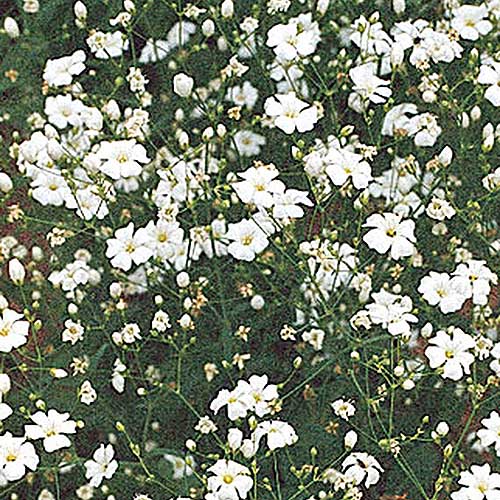
'Covent Garden'
Packages of 800 seeds are available from Burpee.
G. paniculata
The species most popularly used in bouquets, panicled or common baby's breath is the alpine establish in the family unit.
Bristol Fairy
Thousands of tiny white double blossoms grace the billowing, branched flower heads of this popular perennial dazzler. Hardy in Zones iv-9.
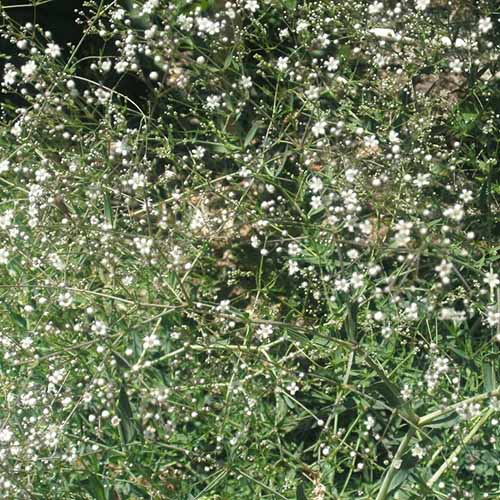
'Bristol Fairy'
Packets of thirty seeds from The Clayton Farm are available on Amazon.
Festival Star
'Festival Star' features snow white flowers on a compact perennial establish that is hardy in Zones v-11, and doesn't require deadheading for continuous, summer-long blooms!
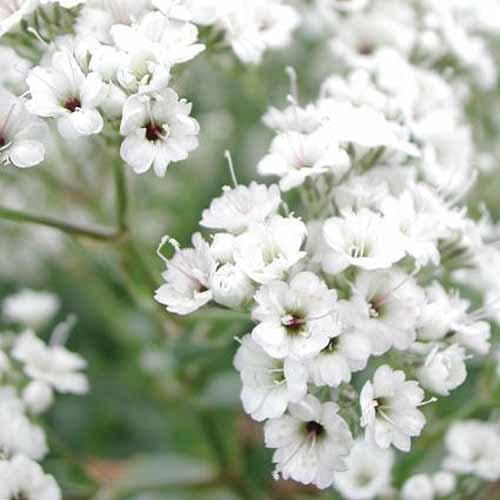
'Festival Star'
Plants in quart-size containers are available at Nature Hills Nursery.
Pink Fairy
'Bristol Fairy' in pinkish grade! This cultivar features double stake pink flowers on tall stems.
G. repens
Alpine gypsophila, or creeping baby'southward breath, makes a beautiful basis embrace and comes in a wider variety of colors than the other two species described in a higher place.
Alba
Masses of bright white star-shaped flowers cover the surface of this mat-forming perennial. Also makes an first-class, middle-popping ground encompass.
Hardy in Zones 2-ix and container friendly.
Rosea
This perennial, creeping cultivar will blossom with rose pinkish flowers continuously throughout the season, and also works as a ground cover.
Hardy in Zones two-9 and container friendly.
Managing Pests and Illness
Though babe'southward breath is generally a hardy, low maintenance institute, bug can ascend, especially if there is too much moisture.
Insects
Nosotros're not the only ones that love baby'due south jiff. Several insects find it pretty delicious.
Aphids
A mutual pest of many plants, aphids seem to savor sucking on leaves of baby'due south breath too.
It's piece of cake to identify these soft bodied insects, even though the damage they cause is frequently not obvious until the leaves brainstorm to curl.
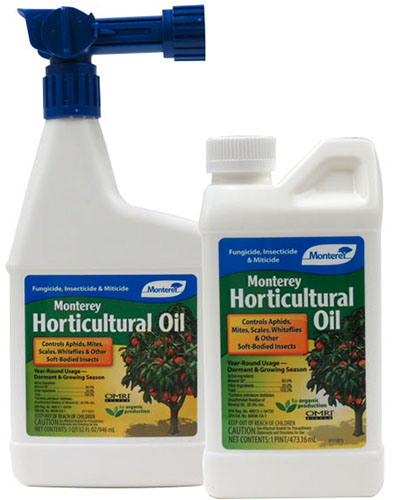
Monterey Horticultural Oil
If the undersides of the leaves are itch with aphids, try applying a horticultural oil like this one, available at Arbico Organics.
Learn more about how to manage aphids in the garden in our guide.
Japanese Beetles
Japanese beetles chew characteristic, unsightly holes in found leaves. Yous can pick the beetles off by hand early in the morning and dispose of them in a bucket of soapy h2o.

BotaniGard Maxx
If in that location are besides many developed beetles to mitt choice or shake off and you desire to try a spray, consider BotaniGard Maxx, which is also available at Arbico Organics.
Leafhoppers
These bugs spook easily, and as their name suggests, will bounce away when disturbed – and then they can be hard to place. You may discover tiny hopping insects when you get close to or brush upwards confronting your constitute.
Leafhoppers suck on plants, leaving low-cal greenish or yellow stipples behind on the leaves, and they serve every bit a vector for diseases such equally aster yellows (read more nearly that below).
Most control options are best used before populations are established. Unfortunately, once the damage is visible, leafhopper populations tend to be high.
Nonetheless, if you do notice leafhopper damage and want to catch them before they crusade more damage, you tin can attempt applying BotaniGard Maxx to rid the garden of these pests as well.
Slugs
Surprise, surprise, another leaf eater. Slugs are occasional Gypsophila pests that volition chew holes into or sometimes eat entire leaves. You can handpick these too.
Read more about how to control slugs in the garden hither.
Disease
Though generally disease-complimentary, several diseases tin can affect the stems and foliage of baby's breath, mainly during wet periods.
Alternaria Foliage Spot
In warm and humid or wet weather, fungi in the Alternaria genus produce round reddish-dark-brown spots, sometimes with gray centers, on the leaves.
To prevent spread, remove diseased institute parts and prune to better airflow.

BioSafe Disease Control Spray
If that doesn't aid, try applying BioSafe Affliction Control spray, available at Arbico Organics.
Aster Yellows
If yous discover your institute is stunted, growing excessive branches, and its flowers are deformed and maybe have green petals, you lot might suspect aster yellows.
This is caused past a phytoplasma vectored by leafhoppers.
To control aster yellows, you volition need to manage leafhoppers and keep the surrounding expanse weed free.
Root Rot
If the soil is wet or not draining well, baby's breath can suffer from root rot. You may discover yellow or wilting leaf. Finish if you are watering.
Unfortunately, this plant doesn't respond well to being transplanted, then rehoming plants to better locations is non a good strategy.
Brand sure to showtime with well draining soil in the first identify, to prevent this disease.
Best Uses
G. paniculata is a popular bouquet filler in floristry. The blusterous white blooms add dimension, texture, and a pop of white.
To use your ain baby's breath plant as a cut flower, snip stems when half the flowers are open and add to bouquets of flowers, greenery, or just display it on its own!

To dry information technology to use in arrangements afterward, cut early in the morning and hang upside down in a dry, dark place for at least two weeks.
Y'all can use any species of infant's breath every bit a filler in the garden too! It looks beautiful planted in small groups, in rock gardens, equally a border, or in between wildflower plantings.
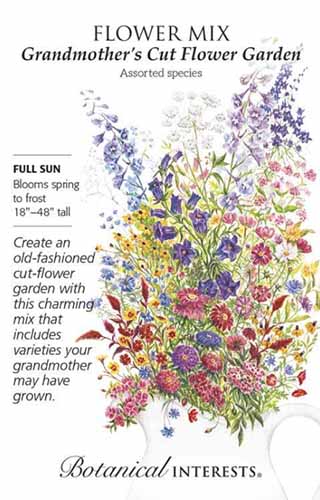
Flower Seed Mix
It is often included in flower seed mixes, such as this one from Botanical Interests.
Try it in a pretty pot on your patio or a hanging basket on your deck.
The taller cultivars work equally an excellent screen to mask the dying stems and foliage of early bloomers such as bound bulbs and oriental poppies.
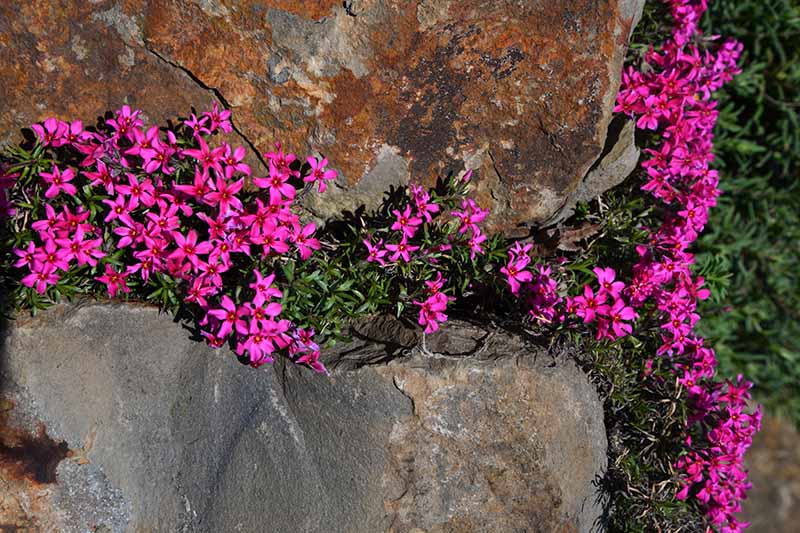
Let mat-forming footing cover cultivars pour over rocks or physical walls, or use as a thickly flowered edging plant.
Quick Reference Growing Guide
| Plant Type: | Flowering annual or perennial | Flower / Foliage Color: | Pink, white/green |
| Native to: | Europe, central and western Asia | Maintenance: | Depression |
| Hardiness (USDA Zone): | 4-9 | Tolerance: | Deer, drought, salt |
| Bloom Time: | Summer to fall | Soil Type: | Average to sandy |
| Exposure: | Full dominicus | Soil pH: | 6.v-vii.5 |
| Spacing: | vi-10 feet | Soil Drainage: | Well-draining |
| Planting Depth: | 3 millimeters (seeds), depth of root ball (transplants) | Attracts: | Butterflies |
| Acme: | 4-24 inches, depending on species | Uses: | Borders, ground cover, mixed plantings |
| Spread: | 12-24 inches, depending on species | Family: | Caryophyllaceae |
| Growth Rate: | Medium | Genus: | Gypsophila |
| Water Needs: | Low | Species: | Elegans, paniculata, repens |
| Common Pests: | Aphids, Japanese beetles, leafhoppers, slugs | Common Diseases: | Alternaria foliage spot, aster yellows, root rot |
Baby'south Breath: Exactly as Yous'd Imagine It
The mutual proper name says it all: these flowers are delicate and cute. Unlike a new baby though, Gypsophila is easy to care for and does well without much attention.

Broadcast the seeds and let it fill in bald areas of your garden, add texture and volume to wildflower plantings, and enhance your home garden bouquets. Ta-daa!
It'due south a filler that never gets old. Where accept y'all spotted information technology… a wedding, at a babe shower, in a romantic gift from a special someone? Tell me in the comments below!
Plus, if you grow it, which species practice you have and where do yous grow it in your garden?
Observe some amazing ideas on where and how to apply baby's breath, including some fun ways to arrange it in these guides next:
- Abound Your Own Cut Bloom Garden
- Make a Romantic Blooming Eye Centerpiece in half dozen Easy Steps
- Put Your Green Thumb to the Test: Arranging Leaf from Your Garden
Photograph by Sylvia Dekker © Enquire the Experts, LLC. ALL RIGHTS RESERVED. Run across our TOS for more than details. Production photos via Arbico Organics, Botanical Interests, Burpee, Nature Hills Nursery, and The Clayton Farm. Uncredited photos: Shutterstock. With additional writing and editing by Allison Sidhu.
Source: https://gardenerspath.com/plants/flowers/grow-babys-breath/
0 Response to "How to Use Babys Breath Flower in Garden"
Post a Comment